AI Agents for Automotive Dealer Inventory Analysis
Continuous repricing and stocking decisions keep pace with daily market shifts.
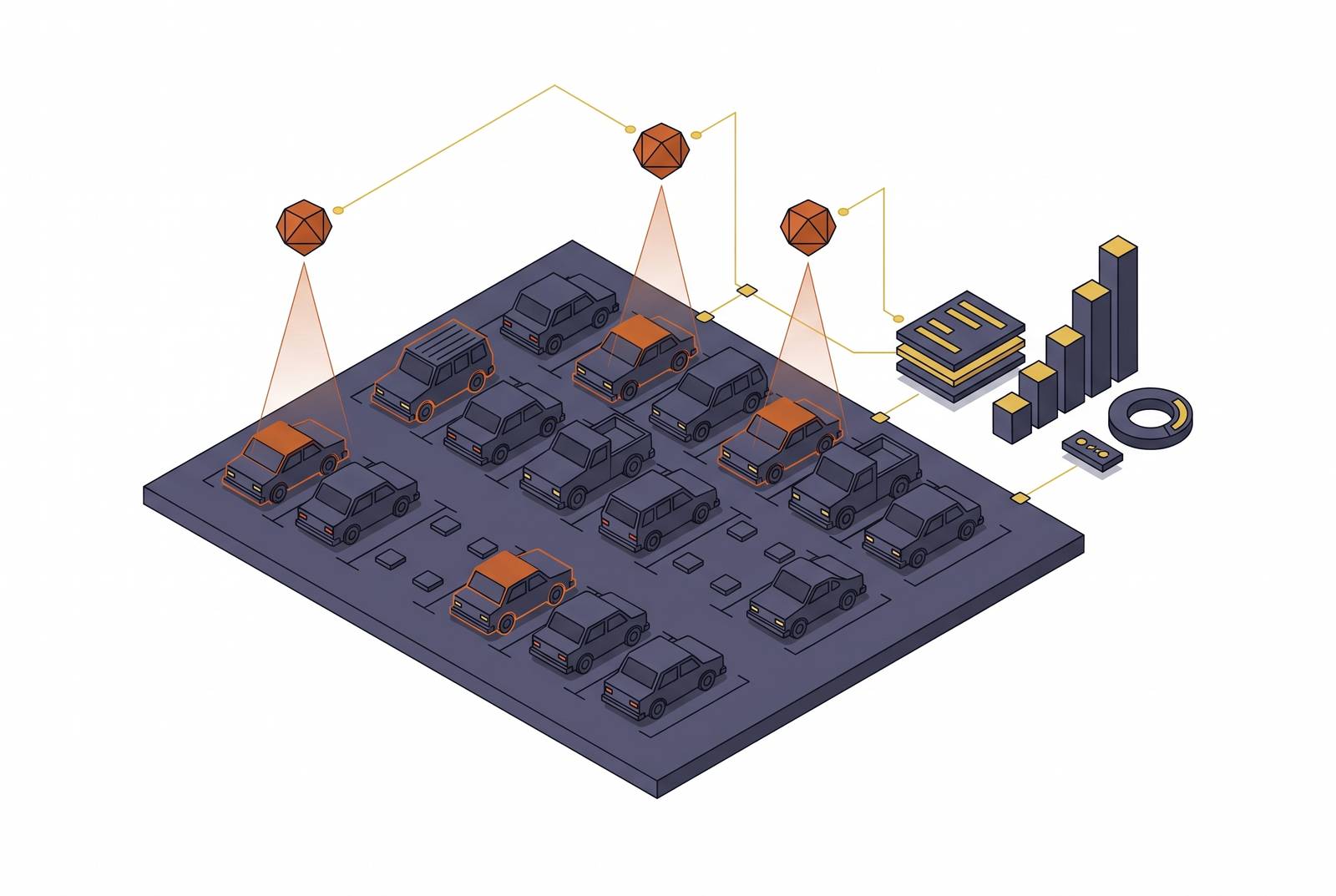
AI agents for automotive dealer inventory analysis turn work that managers do from time to time into a workflow that runs all the time. Their value depends on how quickly a market signal leads to a VIN-level action, beyond the help that better recommendations alone can give. Dealers get measurable results when live data, pricing and stocking decisions, and governed execution operate as one process.
Why inventory analysis is the highest-leverage AI use case in a dealership
Inventory decisions determine gross profit more directly than any other daily dealership function. A mispriced unit ties up capital, while a stale trim compresses margin and can age into a loss. These effects concentrate at the vehicle level. That makes inventory a precise target for automation because the decision and its financial consequence can be evaluated against the same unit, rather than inferred from a broad measure of dealership activity.
The constraint is the pace of review. Even attentive managers review inventory weekly at best, while competitor pricing, local search volume, and days-on-lot change daily. A manager can make a sound decision using the information available at a meeting, yet that decision may no longer fit the market before the next review. Another report leaves that mismatch in place if it waits for the same meeting.
An inventory agent runs the analysis throughout the time between those reviews. Unlike a tool that helps a manager prepare for a weekly discussion, it can identify a change while there is still an opportunity to respond. This is why inventory provides a stronger anchor for the argument than lead response or service scheduling. The dealership can measure a specific result: how quickly it responds when a vehicle’s price, demand, or aging risk changes.
What the AI agent is actually reading — data inputs that make VIN-level decisions possible
VIN-level analysis begins with the relationship between the vehicle and its local market. The agent reads live competitor listings for the same trim in the same market, together with local search volume and demand signals by ZIP code. National averages cannot supply that local context. A vehicle’s apparent competitiveness depends on the alternatives available to nearby buyers.
Days-on-lot and reconditioning cost distinguish vehicles that might otherwise look similar in a market comparison. Auction feed data and sales history show what has been bought and sold, while seasonal patterns and trade-in flow help show how demand and supply change. Together, they let the agent assess a specific VIN rather than treat every example of a trim as interchangeable.
The DMS, inventory feed, auction data, and marketplace listings are operating sources. A copy of yesterday’s data may describe the lot accurately as it was, but it cannot establish what is actionable today. The best setup brings those feeds together on top of or beside the existing DMS, with integration in place from the start.
Accuracy is as important as freshness. Duplicate listings, missing option data, and stale photos degrade forecast accuracy before the model runs. These defects weaken the evidence on which every later recommendation depends.
How the agent turns live data into VIN-level pricing and stocking decisions
The first useful output is risk segmentation. Two units with the same days-on-lot can require different responses because their prices, demand, and market positions differ. A well-priced sedan in high demand may need a small nudge. An overpriced niche trim may need a substantial markdown or a wholesale exit. Ranking units by how likely they are to sell soon puts the focus on the riskiest vehicles, which may differ from the oldest ones.
For acquisition, the output identifies which vehicles to buy, from which sources, and at what maximum acquisition cost. Local forecasting narrows that decision to the trims, colors, and price bands expected to move fastest in a specific ZIP code. The agent may tell the dealer to stop restocking a trim when local demand is too low to support another purchase, even if the national sell rate looks good.
Pricing converts the same market evidence into a decision about what to charge for a particular VIN as it ages. The price is updated daily against live competitor data. Merchandising addresses how that vehicle’s listing looks, where it is promoted, and whether it should be featured in advertising. These outputs are specific operational choices.
The functions also depend on one another. A system that handles pricing but leaves people to take photos and check listing quality still has a merchandising bottleneck. VIN-level advertising has a similar dependency because the ad must match the car available today. Without live inventory access, a precise advertising recommendation can still be based on a vehicle record that no longer reflects the stock.
What end-to-end execution actually means — from signal to action without a manager’s weekly review
A dashboard and an agent differ at the point where a recommendation must become an action. The dashboard presents an output for someone else to implement. The agent executes the permitted task or queues the required review in the live workflow. If every routine recommendation returns to a manager’s weekly agenda, the system has restored the delay it was intended to remove.
The sequence begins with a concrete signal. A VIN may cross an aging-risk threshold, or a competitor may reprice a comparable unit. The agent turns that signal into a specific response, such as repricing by a defined amount, pushing the vehicle to advertising, or flagging it for wholesale review. It then executes or queues the response without waiting for a scheduled inventory meeting. The action is logged with a traceable rationale so that oversight can follow the decision back to its basis.
Pricing floors, stocking limits, and wholesale authority thresholds set the bounds of what the agent can do. The agent can carry out routine repricing within those rules, but a person must review a decision that crosses a threshold. Queuing a wholesale review is therefore not a failure to finish the workflow when the agent lacks authority to approve the exit. It is the governed outcome for that decision.
This distinction separates supportive AI from agentic AI. The former helps a person work faster, while the latter completes a bounded task and involves a person when needed. Aging inventory suits that approach because the workflow has plenty of data and a large amount of work to process. Its scope is specific enough to automate without attempting a broad replacement of professional judgment.
Why most dealerships with AI tools are not seeing this workflow run end-to-end
Broad AI adoption has not translated into measurable operational results for most dealers. Many tools are configured to display recommendations, with no complete path from the output to a live action. A dealership can therefore have an AI interface and still run inventory on the same human review cycle it used before.
An unclear objective compounds that problem. “Improve inventory management” does not identify a result that a dealer can evaluate, while reducing average days-on-lot for aged units by a defined amount within a fixed window does. Without that distinction, a successful demonstration can stand in for an operational outcome. The tool appears capable, but the dealership has not established what it was bought to fix.
Ownership is another break in the chain. Recommendations may arrive without anyone assigned to act on them within a set time. Even a technically sound output then has no dependable route to completion, particularly when it requires an exception decision. Responsibility for the work that remains outside the agent’s authority is missing.
Upstream data hygiene is also commonly skipped during rollout, leaving the model to operate on defective inputs. A polished pilot leaves open whether those inputs, live integrations, and the people responsible for escalations can keep the workflow running. These failures explain the gap between a convincing demonstration and a production workflow. They are also conditions a dealership can resolve before launch, rather than evidence that inventory AI cannot deliver results.
What production readiness requires before an inventory agent goes live
For a dealership preparing to deploy, the sequence starts with data readiness. Inventory data must be clean, governed, accessible to the agent, and supported by clear lineage. Option data, photos, and pricing history must be accurate at the VIN level, and the feed must be live. This work precedes model performance evaluation. Otherwise, the dealership cannot distinguish a weak recommendation from one produced by an inaccurate vehicle record.
The agent needs live access to the DMS, inventory feed, auction data, and marketplace listings, together with the ability to execute or queue the actions it is authorized to take. Automotive vocabulary is part of that readiness, including trim, ACV, lien payoff, and reconditioning cost. A general-purpose tool that lacks this vocabulary is not production-ready merely because it can connect to data. Production readiness depends on which inventory workflows it can actually finish.
Governance then defines both authority and accountability. Pricing floors, stocking authority limits, and wholesale thresholds must specify where human approval becomes necessary. Every action needs a logged, traceable reason, and a named owner must review escalations within a set time. A rollback mechanism is also required if recommendations diverge from expected behavior. These controls make continuous execution compatible with management oversight.
Success criteria must be fixed before launch. A drop in days-on-lot or markdown-per-VIN, or a rise in gross-per-unit on aged inventory, gives the dealership a clear business result by which to judge the deployment. The chosen measure needs a defined target and evaluation window. That commitment gives the first operating period a clear purpose.
What dealers should expect from a properly deployed inventory agent in the first 90 days
An agent that is properly deployed should start to make changes the dealership can measure within weeks, well before quarters have passed. The earliest signals concern both vehicle performance and the way managers spend their attention. Average days-on-lot for flagged units should begin declining within the first pricing cycle after launch. At the same time, managers’ daily work should shift from full-lot reviews toward a short list of escalations involving the riskiest vehicles.
Pricing behavior provides another test of execution. Markdown-per-VIN on aged units should decrease as the agent reprices proactively rather than waiting for a problem to demand a larger response. This measure connects the timing of action to the cost of clearing aging stock. It also distinguishes a workflow that responds continuously from one that merely identifies the need for a later markdown. Movement in the agreed metric provides the relevant evidence.
Advertising allocation should change as well. More of the spend should go to units flagged as high-velocity, replacing an even spread across the lot. That shift shows whether VIN-level analysis guides merchandising as well as the work done in a pricing interface. Because the advertising decision depends on what is in stock now, it also tests whether the inventory connection lets the agent act on live data.
The 90-day window gives the dealership time to review several pricing cycles and stocking decisions. It is long enough to assess repeated operation, yet short enough for a dealer group to establish whether its chosen success metric is moving before an organization-wide rollout. These expectations require testing, and the rate of improvement may vary. The rollout decision should rest on the agreed business outcome and evidence that routine actions are being completed within guardrails, with exceptions reaching the people accountable for them.