Contract Obligation Extraction Agents for Procurement Compliance
Extraction agents turn buried contract obligations into actionable compliance workflows.
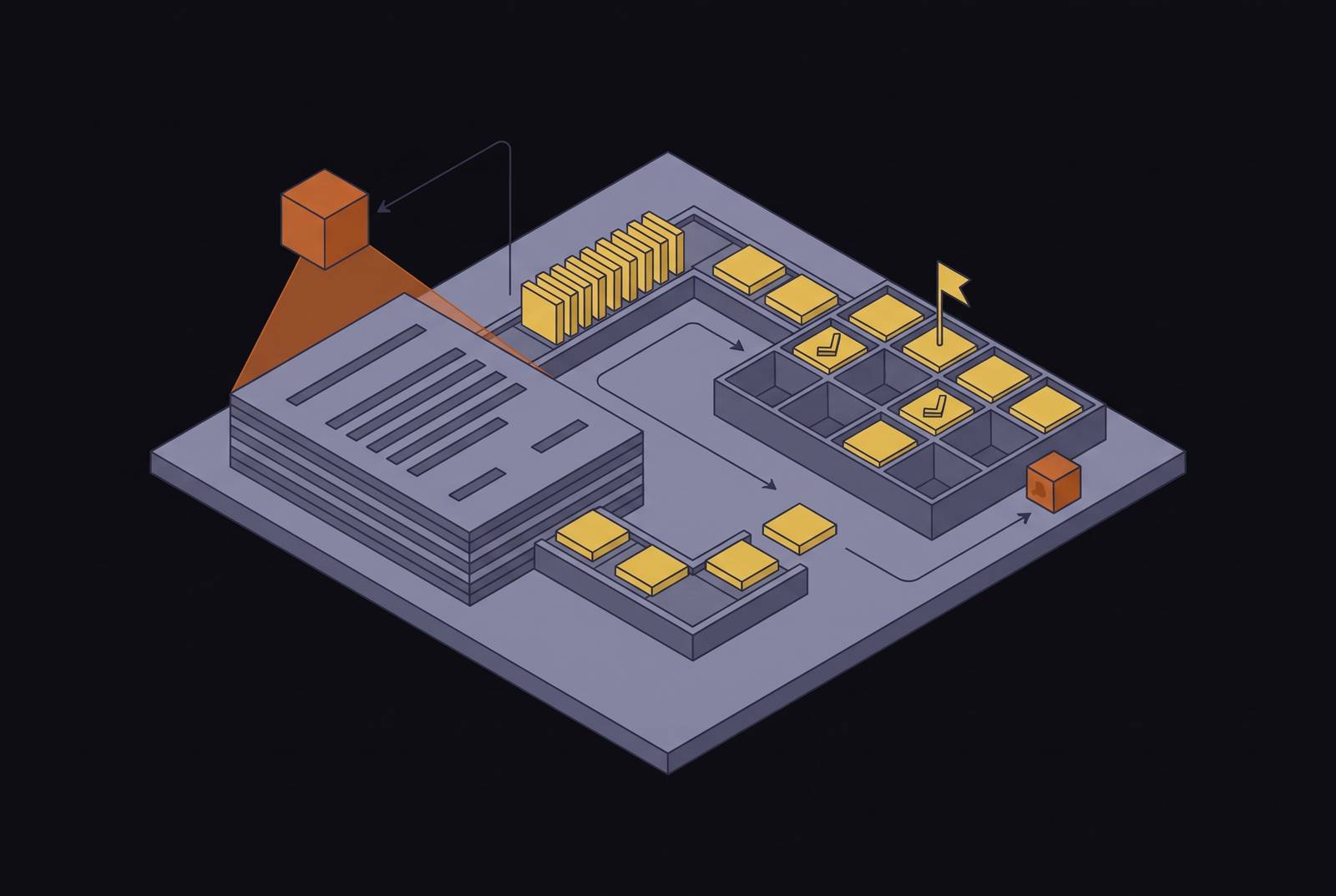
Contract obligation extraction agents address negotiated contract value that leaks after signature because obligations remain buried in PDFs and disconnected systems. They turn contract language into structured records, track the commitments, and route compliance work to the people who own it. Their effectiveness depends on more than extraction accuracy. Recovering value requires reliable contract data, operational integration, and clear ownership of the actions that follow.
The gap between a signed contract and the value it promised
A procurement team can agree on good rates, get service commitments and volume rebates, and still lose the value those terms promised. The supplier’s invoice may not be compared with the contracted rate. A rebate may go unclaimed because nobody tracks the qualifying volume. A renewal window may close before procurement is ready to renegotiate. The agreement is signed, but its benefits remain conditional on work that happens afterward.
The terms already exist in the contract. Pricing escalations, SLA thresholds, renewal windows, and compliance clauses encode how the commercial relationship should operate. Until those terms connect to a person or system that acts on them, however, they remain static text. Leakage therefore concentrates in predictable places. Each missed deadline or unchecked threshold is a break between an agreed term and its execution.
Three structural conditions sustain that break. Contracts sit in PDFs and legacy repositories disconnected from operational systems, while tracking happens manually and at intervals. Responsibility is also divided across legal, procurement, and finance. With the work split this way, no one consistently owns compliance after signature, even when each team knows its part of the agreement.
Why manual obligation tracking cannot close this gap at enterprise scale
A single master services agreement can contain pricing obligations, SLA commitments, data-processing restrictions, renewal rights, audit rights, and regulatory clauses. Each needs its own rules for monitoring and often its own owner. A calendar reminder can flag a date. It cannot interpret whether a performance threshold has been met or determine how an amendment changes the original commitment.
The portfolio also changes after the initial review. Amendments, addenda, and side letters layer new obligations over existing terms, making the relationship between documents part of the interpretation task. Manual systems rarely capture those interactions reliably. Even a carefully maintained spreadsheet depends on someone recognizing the change, interpreting its effect, and updating the relevant record.
Shared drives preserve documents, and spreadsheets organize information, but neither reads an agreement to establish what it requires, from whom, and by when. The structural failure is often not ignorance at signing. It is the absence of a persistent connection between the obligation and the workflow responsible for executing it. Reviewing contracts by hand more often still leaves the work dependent on people, so the system’s design needs to change along with the review schedule.
What contract obligation extraction agents actually do, technically
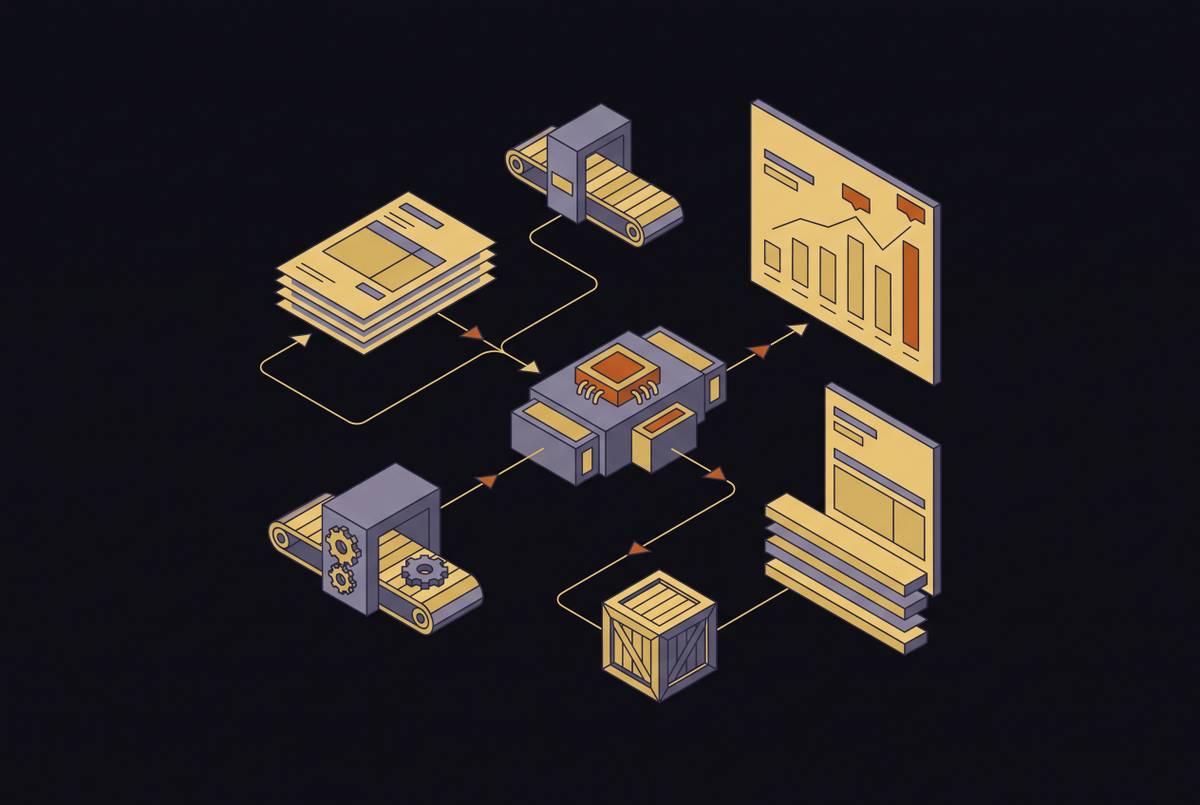
Extraction agents turn obligations in contract documents into a machine-readable layer that operational workflows can use. NLP and ML models read documents across formats, languages, and structures, identifying obligations by type, party, trigger condition, and deadline. Extraction is the most mature AI contract capability. The next step classifies and normalizes those findings into a schema containing the obligation type, responsible party, due date, performance threshold, and consequence of breach.
That schema makes the obligation available for monitoring. Agents compare invoice amounts with contracted rates, delivery timestamps with SLA windows, and renewal dates with the calendar. When they identify a deviation, they route it to the appropriate owner with a brief containing the relevant contract language. More autonomous configurations can initiate an escalation, a renegotiation trigger, or a compliance task. These are distinct capabilities that extend beyond accurate document reading.
ContractSafe maps the progression through a four-tier framework in 2026, from AI-assisted extraction at Tier 1 to fully orchestrated multi-step agent action at Tier 4. Most production deployments in mid-2026 operate at Tiers 1–2, while Tier 4 orchestration is still emerging. A procurement leader evaluating an agent therefore needs to distinguish what it reads from what it monitors and what it can initiate.
Turning the obligation layer from a queryable record into a functioning compliance workflow requires links to ERP, procure-to-pay systems, and supplier portals.
How extraction agents operate across the procurement contract lifecycle
Before signature, agents extract obligations from counterparty paper and compare them with internal playbooks. They flag deviations while the terms can still be changed, rather than leaving procurement to discover them during execution. This is where review can move from days to hours. The intervention addresses a different failure from post-signature monitoring, but both depend on turning contract language into explicit requirements.
Once the contract is active, agents begin to monitor those requirements. Agents track SLA performance, pricing escalation triggers, and volume commitment thresholds continuously, surfacing exceptions as they emerge ahead of quarterly review. This connects a negotiated benefit to the operational evidence needed to pursue it. A volume rebate, for example, is no longer only a clause preserved in the agreement. Its qualifying threshold becomes something the system can monitor.
Renewals and amendments extend the same logic over time. Agents flag renewal windows months in advance and generate obligation summaries for renegotiation briefings. When an agreement changes, they re-extract and reconcile obligations across the original contract and its addenda.
Across the portfolio, the same structured records support a broader view. Agents can identify an underperforming supplier SLA clause across multiple contracts or a pricing escalation that has triggered uniformly. How widely agents are deployed determines which failures they can spot, from a deviation in one review to a compliance gap that keeps recurring across suppliers.
What separates a production-grade deployment from a pilot that stalls
Production readiness starts with a contract population that supports reliable extraction. Fragmented repositories, inconsistent formats, and missing metadata create errors that compound as an agent moves through multiple steps. A successful demonstration on well-structured documents does not establish reliability across a disorganized archive. The solvable prerequisite is to establish data quality before expanding the workflow’s scope.
Governance must be designed with the same precision. HFS Research and Art of Procurement identify lagging governance as the top unintended risk from AI in procurement. Audit trails, escalation paths, and human override mechanisms establish the conditions under which regulators and finance teams can accept agent outputs. They are production requirements. The deployment also needs a defined use case with enough transaction volume to generate evaluation data.
During piloting, human review should cover every agent output. That queue supplies the ground-truth dataset needed to measure accuracy, while before-and-after metrics must be established before go-live. Buyers should also ask vendors what runs in production today and which features are still on the roadmap. Agentic features remain largely in beta or early access in mid-2026.
The proposal to improve data quality after deployment reverses the dependency. Unreliable inputs produce obligation records the business cannot trust, leaving the new system subject to the same inaction as the old one. The EU AI Act moves governance toward compliance architecture, with most remaining general provisions applying from August 2026 and high-risk AI rules deferred to December 2027 or later. Documentation, human oversight, and traceability are architectural inputs.
How an AI Operations Audit establishes the readiness baseline before deployment
An AI Operations Audit converts these prerequisites into a scored, actionable baseline. It assesses enterprise data quality and AI governance architecture to establish what an extraction agent can do on day one and what must be resolved first. The output is a deployment sequence. Its purpose is to connect readiness findings to specific contract populations and workflows.
The data assessment inventories where contracts live and examines document consistency, completeness, and metadata. It also identifies contract types with enough volume and structure to support reliable extraction. Those findings help teams start with the largest groups of contracts that have the best data. Access to the documents alone does not make the whole archive equally ready.
The governance assessment maps decisions that require human approval before action. It defines audit trails for internal compliance and emerging regulatory requirements, then establishes escalation paths and human override mechanisms. The design must retain human judgment at the right points without recreating the manual bottleneck. That requires distinguishing an obligation the agent can surface from a decision it is authorized to act on.
Together, the assessments rank use cases by readiness, data quality, and expected impact. For finance, the resulting before-state baseline and projected after-state provide an ROI methodology tied to identifiable work. CFOs can judge the proposed deployment by the obligation types and groups of contracts it will cover, going beyond a broad promise that AI will make work more efficient.
What measurable outcomes procurement teams should expect, and how to baseline them
Bristol-Myers Squibb reduced an RFP process that had taken months to a fraction of that time, sharply reducing supplier response evaluation time and increasing procurement capacity without additional headcount. Deloitte and ServiceNow deployed digitized supplier onboarding for a luxury automotive OEM and achieved a fourfold increase in onboarding speed, with a large cohort of Tier-1 suppliers migrated. These cases show gains in procurement throughput and capacity. They do not, by themselves, establish an obligation extraction accuracy rate or a recovered-value percentage.
For obligation extraction, measurement begins with four operational metrics. Obligation capture rate shows the share of contractual obligations that agents successfully extract and structure, while monitoring coverage shows the share of active contracts that agents monitor continuously. Exception response time measures how quickly a flagged deviation reaches the right owner. Breach rate compares outcomes before and after deployment. Establishing these baselines before go-live makes the change measurable.
Task success rate adds an end-to-end reliability measure. It records the percentage of multi-step obligation workflows completed without human intervention, which is different from measuring whether an individual clause was extracted correctly. An agent can read accurately without completing the operational work reliably. The workflow benchmark tests that distinction.
Portfolio-level tracking then connects individual deployments to sustained investment. Measuring AI’s contribution across use cases reveals compounding value that isolated pilot metrics can miss. Finance alignment depends on maintaining that connection between the baseline, the operational result, and the projected return used to approve the budget.
The workflow changes procurement teams should plan for when extraction agents go live
Procurement staff move from finding obligations to reviewing obligations surfaced by agents. The work becomes faster, but the judgment changes. Reviewers assess accuracy and completeness. Teams should plan for this shift before go-live, including communication about what the agent does, what it does not decide, and where human judgment remains authoritative.
The pilot review queue supports that transition operationally. It helps check quality and supplies data to test how well the agent handles the organization’s own contract types. Without clear expectations, the first ambiguous output can send staff back to manual processes. Change management is a documented cause of pilot failure.
Ownership also becomes more explicit when exceptions arrive continuously. A supplier SLA breach or pricing escalation trigger requires someone to own the response, exposing accountability gaps that informal tracking had obscured. Teams without clear obligation ownership need to establish it during rollout. Otherwise, accurate extraction can still end in an unanswered notification.
Sustained operation requires governance across four functions. Legal sets the playbook standards, procurement tracks obligations, finance measures ROI, and IT handles system integration. Their coordination increases at go-live because the agent operates across all four responsibilities. A governance structure that defines each function’s role must therefore be established as part of the deployment itself.