AI Agent Rollout in Workers Compensation Claims Operations
Agents handle workflow gaps when human judgment guards medical and legal decisions.

AI agent rollout in workers’ compensation claims operations delivers measurable value when agents own complete workflow segments. Production readiness depends on connecting that ownership to reliable data, explicit human decision boundaries, and measurable outcomes. The practical route is staged deployment across intake, servicing, medical management, and return-to-work, with each segment proving its value before the next expands the scope.
Why workers' compensation claims operations are structurally primed for end-to-end agent deployment
A workers’ compensation claim unfolds over weeks or months through interactions among the injured employee, employer, HR, adjuster, and medical providers. Each step depends on information or action from another party. Task automation does not resolve those dependencies. A tool may process a document while leaving the next request, deadline, or escalation unattended. The structural opportunity for agents is ownership of the work between those steps.
Sollers Consulting’s 2026 analysis identifies delayed first reports of injury, medical authorization bottlenecks, fragmented communication, compensability disputes, return-to-work coordination failures, and IME/utilization review delays as operational choke points. These problems cross system and organizational boundaries. A claim file may contain wage records, medical bills, pharmacy data, nurse case management notes, attorney involvement, reserves, and settlement strategy. When automation handles those elements separately, teams still face duplicate reviews, inconsistent documentation, and delayed escalation.
Ushur’s July 2026 analysis locates much of the friction in gaps between steps. A missed form or document sitting in an inbox can interrupt progress even when each system performs its assigned task. Basic automation routes a claim. An intelligent claims operation also considers injury type, jurisdiction, employer history, prior claim patterns, treatment indicators, attorney involvement, and predicted severity before assigning the handling path.
What an AI agent actually does across the workers' comp claim lifecycle, from FNOL through return-to-work
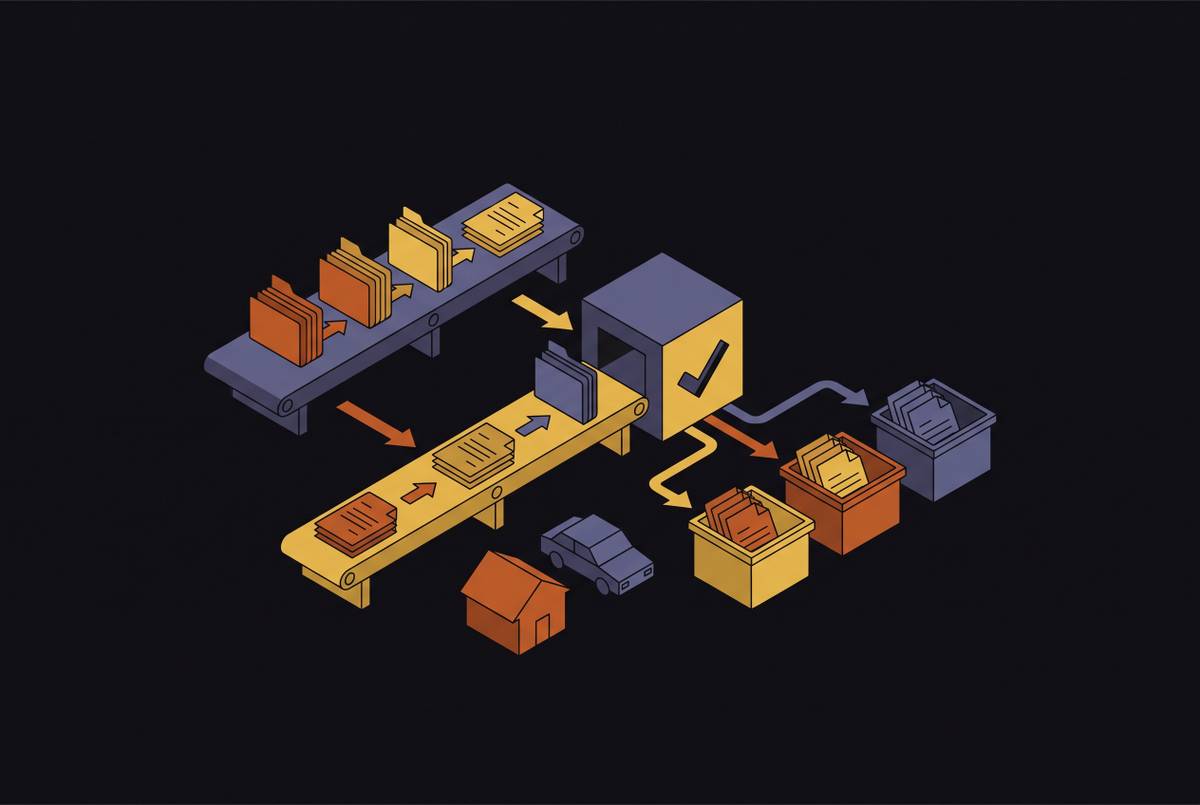
At first notice of loss, or FNOL, the agent extracts injury details, job duties, and potential red flags from the First Report of Injury. It classifies the claim and identifies missing information. Enkefalos’s analysis describes triage by injury type, severity indicators, jurisdiction, employer group, and missing data to support accurate assignment from day one.
During servicing, ownership extends from an inquiry to its resolution or handoff. An agent handling a delayed-payment inquiry can check claim status against core systems, identify the missing document, send a secure upload link, confirm receipt, and update the adjuster. No human must orchestrate every intermediate step. Document AI also extracts information from accident reports, medical records, bills, wage statements, legal letters, and return-to-work forms. Structured summaries give adjusters injury facts, treatment history, work status, payments, reserves, and open issues.
Medical bill review applies official medical fee schedules and CPT coding guidelines to billing data, flagging upcoding, unbundling, duplication, and other discrepancies. Narrative analysis adds treatment progress, work restrictions, and escalation indicators from physician reports, calls, adjuster notes, and attorney correspondence. Authorization work has a distinct human boundary. The agent assembles the packet against the applicable treatment guideline, logs transmission, monitors the statutory clock, and escalates overdue determinations, while a human signs and sends.
Fraud detection surfaces unusual billing, provider anomalies, repeated injury narratives, conflicting data, and suspicious documentation for human investigation. The signal is not a finding of fraud. Predictive analytics similarly estimates severity, litigation risk, recovery timelines, reserve movement, and return-to-work complexity. These outputs inform adjuster decisions rather than replacing professional judgment on reserves or the response to suspected fraud.
Return-to-work coordination shifts the emphasis toward sustained communication. Agents handle status updates, document requests, and scheduling around modified duty offers, vocational rehabilitation, and supplemental job displacement benefits. Clinical and legal decisions remain with people. Ushur distinguishes the employee navigating benefits and recovery from the employer or HR team managing reporting and documentation. Effective coordination serves both, keeping the employee, employer, HR, and adjuster informed as the claim progresses.
Where human judgment stays in the loop and why that boundary is non-negotiable in a regulated claims environment
Complete workflow ownership does not mean unrestricted decision authority. Workers’ compensation is a regulated environment in which medical and legal judgments can become contested evidence. Agents organize information and surface risk signals. Humans retain decisions wherever legal or medical consequence attaches, including complex psychological injuries, catastrophic claims, and contested compensability requiring empathy, critical thinking, and ethical judgment.
Causation and apportionment opinions mark a hard boundary. Agents may never draft them in workers’ compensation matters because they are physician attestations with legal consequence in an adversarial proceeding. Even a draft in the record is discoverable. Authorization submission has a separate limit because state-specified forms go to claims administrators, and there is no standardized transaction rail that makes fully automated submission safe or legal across jurisdictions. The agent prepares and tracks the packet, but a human signs and sends.
Attorney involvement also calls for human review, with people deciding on legal strategy or settlement. Enkefalos describes workflow intelligence as connecting AI outputs to escalation, supervisor review, nurse referral, investigation, reserve review, and legal assignment. The handoff is itself a defined operational output. As of 2026, the vast majority of enterprise agent deployments use scoped agents with human-in-the-loop oversight, while fully autonomous systems are still used mostly in research and internal tooling and rarely in production claims environments.
The production readiness gap and why most workers' comp AI pilots stall before they reach the claims floor
A prototype can show that extraction, classification, or reasoning works without showing that teams can rely on it to handle claims. The gap is primarily architectural and organizational. Production requires governance, observability, hallucination control, cross-framework coordination, multi-cloud reliability, and combined platform-plus-people production know-how. Most pilots lack most of these surrounding capabilities. Their absence becomes acute when an output affects benefit eligibility, reserve accuracy, or legal position.
Claims environments leave little tolerance for invented information. A small error rate that is manageable in a general-purpose assistant can be catastrophic in claims processing. Governance must therefore define decision authority, while observability makes harmful output detectable and open to investigation. Reliability and coordination must also extend beyond the agent itself because the workflow involves adjusters, nurse case managers, providers, bill review vendors, legal teams, payment systems, and external service providers.
Data access is the prerequisite beneath those controls. Agents need structured claim records, payment status, and employer information together with unstructured medical notes, email correspondence, and narrative reports. Most legacy environments cannot supply both cleanly. Independent systems consequently preserve the same fragmented handoffs that the pilot was intended to remove. Ushur identifies governance, compliance, and enterprise integrations as stronger predictors of long-term success than conversational capability alone in regulated workers’ compensation environments.
What a pre-deployment AI Operations Audit covers in a workers' compensation environment
Executive sponsorship and vendor licenses do not establish readiness. A pre-deployment AI Operations Audit examines whether a defined workflow segment can operate safely and produce measurable improvement before a deployment consumes a claims cycle. Its business assessment establishes what needs to improve within the defined workflow segment and sets the baseline. Its data assessment examines whether inputs are usable and lawful, including whether structured claim records can be reconciled with medical and legal documents across systems not designed to interoperate.
Governance assessment assigns human ownership of decisions and exceptions, including escalation and override for every agent action. Operations assessment tests whether teams can spot harmful output, look into it, and stop it. A confidence score alone is not sufficient. Measurement assessment establishes whether value and failure can be tracked continuously against the original baseline. Together, these assessments distinguish a demonstrable feature from an operational workflow that the claims organization can supervise.
The lesson for deployment teams is to stop or narrow a pilot when harmful output cannot be investigated, improvement has no baseline, or high-impact decisions lack human review or appeal. Benefit eligibility, reserve setting, and legal routing require particular scrutiny under that test. Compliance cannot be deferred until after launch. Cloud-native architecture, accessible structured and unstructured data, and HIPAA and state-specific compliance alignment belong in pre-deployment readiness.
How to sequence deployment across the claims lifecycle to produce operational results from day one
The deployment sequence should follow the audit findings, beginning where data is clean, outcomes are measurable, and the human handoff is clear. FNOL and intake provide the strongest starting point because they are high-volume and structurally consistent. Injury information and employer data are inputs that tend to follow a standard form. The output is a triaged claim file with all its data, and teams can compare intake cycle time with how long it took before deployment. This stage compresses reporting time and replaces manual work while building confidence and data infrastructure for expansion.
Once intake produces clean, structured data, deployment can extend to document management, claim servicing, and medical bill review. These workflows depend on the foundation established at intake. Agents collect missing documents, deliver status updates, and support appointment coordination, with claimant engagement and disengagement rates showing the communication effect. Bill review adds a high volume of work guided by rules in fee schedules and CPT codes, and people review the flagged exceptions.
Predictive analytics, fraud detection, and reserve management follow because reliable model outputs require clean, structured claim data. Their operational dependency is just as important. The orchestration layer must connect a fraud signal or severity prediction to adjuster action before these tools can deliver value. Actionable signals then enter investigation, escalation, or reserve review, while professional judgment remains responsible for the decision.
Return-to-work coordination comes next as the most relationship-intensive stage. Agents handle scheduling, document routing, and communication among the parties, while adjusters and case managers make the clinical and legal decisions. CLARA Analytics’ Agentic Intelligence, launched in September 2026 within the CLARAty.ai platform, assigns a team of agents to individual claims from first notice of loss through resolution. It provides a production example of full-lifecycle deployment. For teams following a staged rollout, each stage must still show a business result that can be measured before the next gets funding, and ROI must be measured in weeks to keep the rollout growing.
How to measure whether deployed agents are delivering operational value in a claims environment
Cycle time for each stage shows whether FNOL intake or document collection takes less time than it did at the pre-deployment baseline. Adjuster capacity shows whether absorbing structured work changes the number of claims handled per adjuster. Claimant disengagement and legal escalation rates reveal downstream effects of communication quality.
Exception and escalation rates add the necessary counterweight. A rising exception rate can indicate poor data quality or a workflow boundary that needs recalibration. The reason for escalation is therefore as important as its frequency. A substantial share of organizations using predictive modeling and AI-driven analytics have not assessed their gains, and an even larger share have not assessed effects on claim closure outcomes. Those deployments need the audit baseline to compare results and show why they should expand.
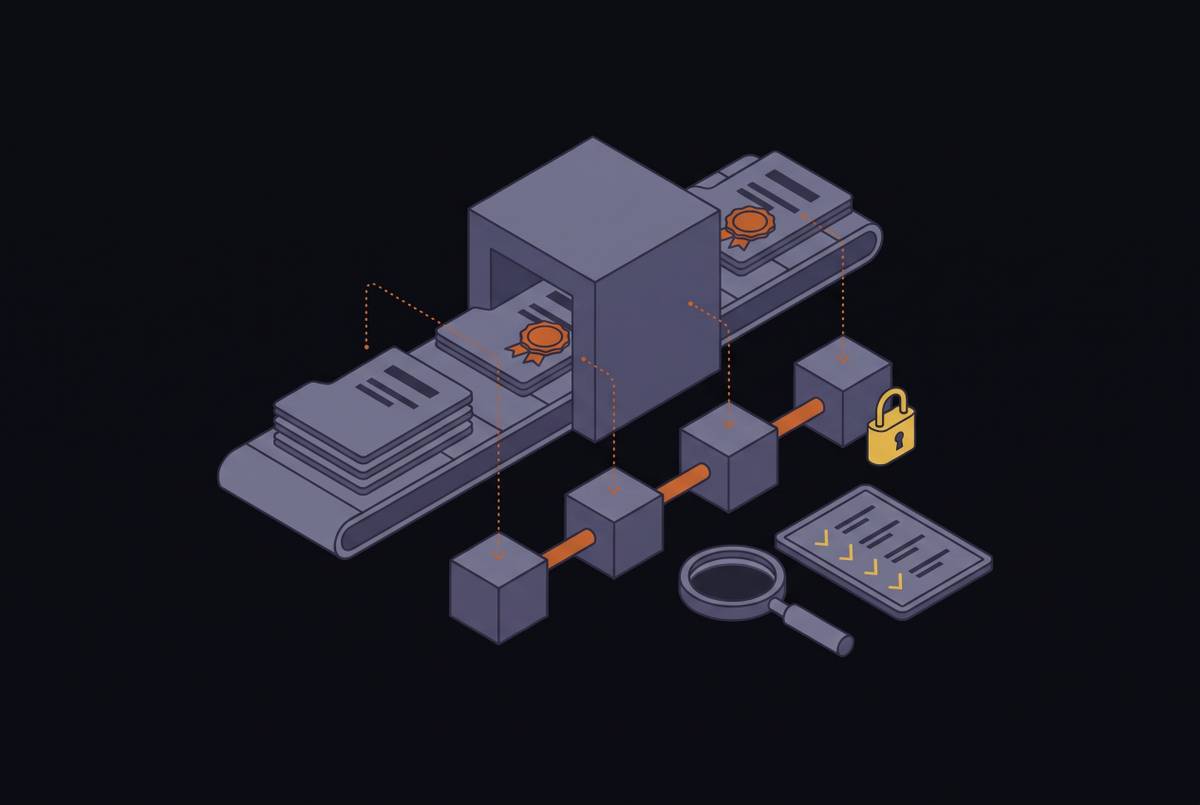
Accountability also requires a record of individual actions. Every AI action must be logged with what the agent did, what data it used, and what it saved. Review must follow a defined cadence tied to the original business case, consistent with NIST AI Risk Management Framework requirements.
The 2026 analysis by Sollers Consulting, Guidewire, and CLARA Analytics concludes that workers’ compensation will be shaped less by individual technologies than by coordination across workflows, systems, AI-driven insights, and operational decisions. Measurement must follow the same logic. When orchestration connects claims work, medical management, payments, fraud detection, and return-to-work coordination, value becomes traceable across the lifecycle.